A criminal conviction may feel final, but it does not always end the legal process. In some cases, a defendant can ask a higher court to examine whether errors during the trial or sentencing affected the result. For people facing criminal appeals in Buffalo and throughout Western New York, understanding the process early is essential because the deadlines are strict.
At Texido Law, we approach post-conviction matters with the same preparation and trial-focused mindset used in serious criminal defense cases. An appeal is not a second chance to present the entire case from the beginning. It is a focused legal challenge to mistakes that may have undermined the fairness of the original proceedings.
What Is a Criminal Appeal?
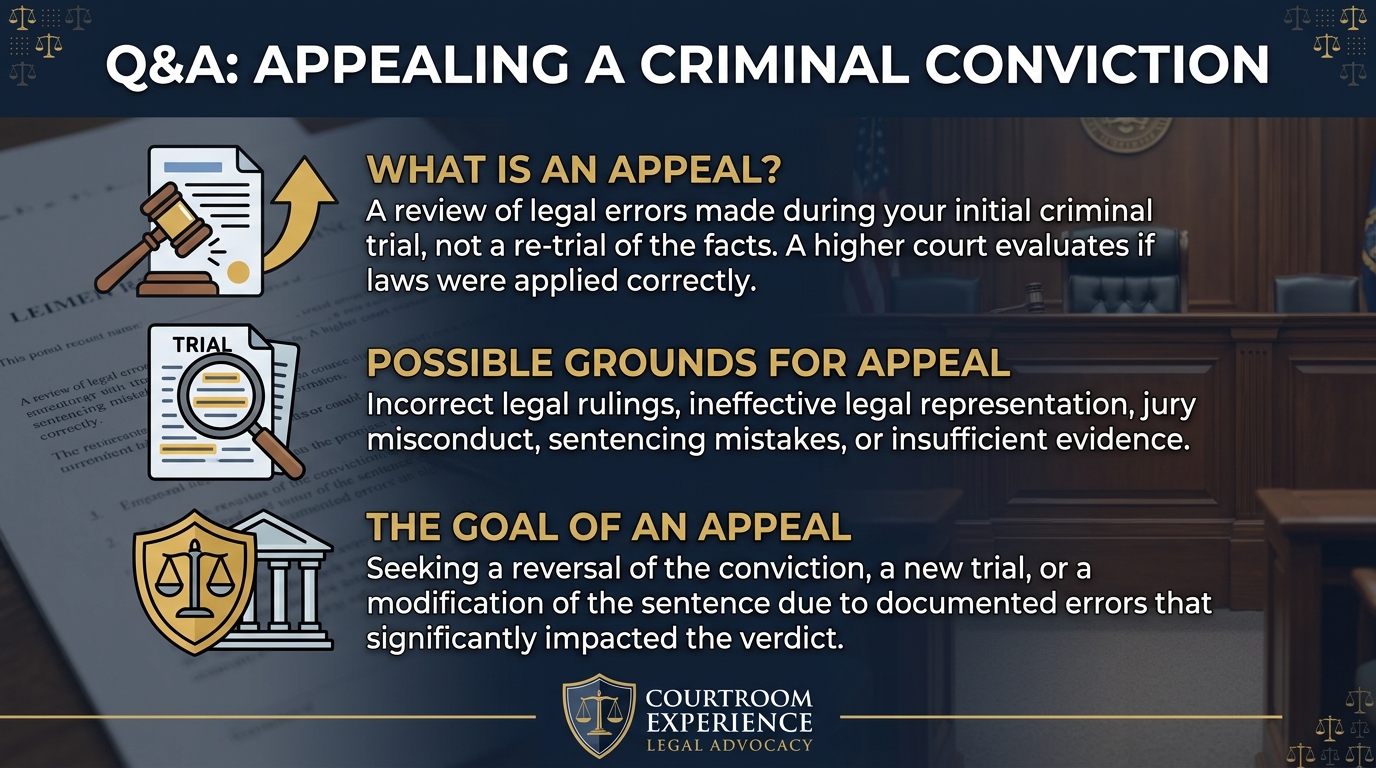
A criminal appeal is a formal request for a higher court to review a conviction or sentence issued by a trial court. The appellate court generally does not hear new witnesses, receive new evidence, or decide which version of events it believes. Instead, it reviews the record already created in the case to determine whether the law was followed.
That record can include motions filed before and after trial, admitted evidence, hearing and trial transcripts, rulings from the judge, and written arguments from both sides. Attorneys submit appellate briefs explaining the legal issues, and in some matters the court also hears oral argument from counsel before issuing a ruling.
The central question is whether a legal error occurred and, if so, whether that error mattered to the outcome. A Buffalo criminal defense attorney handling an appeal must closely analyze the proceedings to identify arguments supported by the record.
Who May Appeal a Criminal Conviction?
Defendants convicted after a judge or jury trial generally have the right to seek appellate review. The route depends on whether the prosecution was brought in New York State court or federal court.
In many state cases, the first appeal goes to an intermediate appellate court. If that court does not grant relief, a defendant may be able to seek further review from the highest court in the state. A federal conviction is ordinarily appealed to the appropriate United States Circuit Court of Appeals.
Timing is one of the most important issues. A federal notice of appeal may be due within as little as 14 days, while state deadlines are often around 30 days but can vary by court and circumstance. Missing the filing deadline can eliminate a critical opportunity for review, which is why a prompt consultation with an experienced defense attorney in Buffalo can matter.
What Are Common Reasons to Appeal?
An appeal is not based solely on disagreement with a guilty verdict. The defendant must point to a legal problem that may have affected the fairness of the case or the final result.
Common issues raised in criminal appeals include:
- Errors during the trial: A judge may have admitted evidence that should have been excluded, kept out evidence that should have been allowed, given incorrect jury instructions, or made another ruling that affected the verdict.
- Ineffective assistance of counsel: A claim may arise when an attorney’s performance fell below an objectively reasonable standard and that deficiency had a meaningful effect on the outcome.
- Juror misconduct: Jurors must follow the court’s instructions. Improper conduct during the trial or deliberations may create an appellate issue when it compromised the fairness of the process.
- Constitutional violations: An appeal may address violations of fundamental rights during an investigation, arrest, or trial. These can include issues connected to an illegal search, improper suppression ruling, or other constitutional protections that affected the proceedings.
The facts and procedural history of every case are different. Texido Law evaluates the record carefully to determine whether there is a sound legal basis to pursue appellate or other post-conviction relief in Buffalo.
What Happens During the Appeals Process?
Unlike a criminal trial, an appeal is not built around live testimony or newly discovered exhibits. The appellate judges review what occurred in the lower court and consider whether the judge, attorneys, and proceedings complied with the law.
Written briefs are a major part of the process. The appellant’s attorney identifies the claimed errors, explains the relevant law, and shows why relief is warranted. The prosecution responds, and the defense may have an opportunity to file a further written reply.
Some appellate courts also schedule oral argument. At that hearing, the attorneys answer questions from a panel of judges and clarify the legal issues raised in the briefs. Once the court completes its review, it issues a written decision.
What Results Can an Appeal Produce?
If an appellate court finds a significant legal error, several outcomes may be possible. The right result depends on the nature of the error and how it affected the case.
The court may reverse a conviction, order a new trial, modify a sentence, or return the case to the trial court for additional proceedings consistent with its decision. In other situations, the appellate court may uphold the conviction and sentence.
An unsuccessful appeal at one level does not always end the matter. Depending on the case, a defendant may request review by a higher state court or, in limited circumstances, seek review from the United States Supreme Court. Other forms of post-conviction relief may also be available in appropriate situations.
Why Is Fast Action So Important?
Appellate rights are governed by deadlines that can pass quickly after a conviction or sentencing. Waiting too long can make it far more difficult—or impossible—to file an appeal and preserve the available legal arguments.
Early action gives a Buffalo trial attorney time to obtain and review the record, identify possible errors, and decide on the strongest path forward. That preparation is especially important in cases involving serious felony allegations, such as drug offenses, violent crimes, weapons charges, DWI or DUI cases, white-collar allegations, and other matters where the consequences can be severe.
Texido Law represents clients in criminal appeals and post-conviction matters across Buffalo and Western New York. With more than 15 years of courtroom experience, the firm brings a strategic, results-driven approach to reviewing convictions, challenging legal errors, and protecting clients’ rights at every stage.
If you or a loved one has been convicted and wants to explore an appeal, Texido Law can review the circumstances of the case and explain the options that may be available. Acting quickly can help preserve the opportunity to challenge a conviction or sentence.